
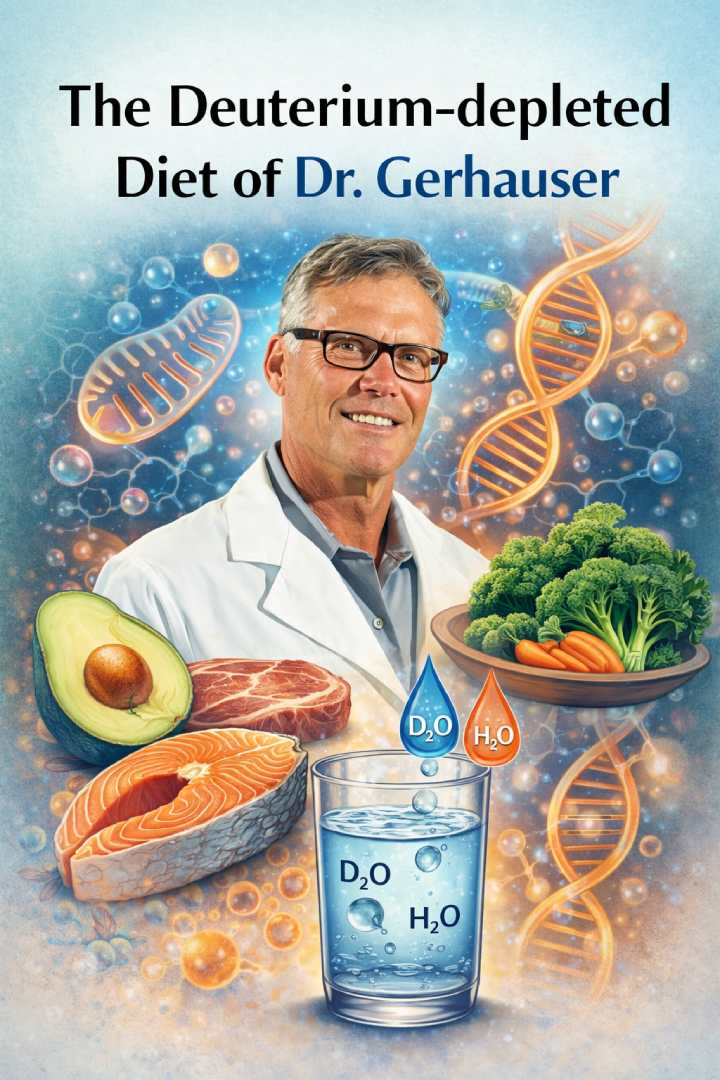

Dr. Gerhauser’s deuterium-depleted diet explores how reducing heavy hydrogen in food and water may support mitochondrial function, metabolic health, and disease prevention. Rooted in emerging biochemical insights, this approach emphasizes fat metabolism, low-carbohydrate intake, and natural food sourcing as key strategies for optimizing cellular energy.
The concept of a deuterium-depleted diet, as presented by Dr. Gerhauser, introduces a novel dimension to nutritional science—one that focuses not only on macronutrients and calories, but on the isotopic composition of what we consume. Deuterium, often referred to as “heavy hydrogen,” is a naturally occurring isotope of hydrogen found in water and organic compounds. While present in small amounts, its accumulation in the human body may influence cellular processes, particularly within the mitochondria.
Dr. Gerhauser’s dietary framework is based on the premise that modern diets—rich in processed carbohydrates and sugars—contribute to elevated deuterium levels in the body. In contrast, traditional diets that emphasize fats and proteins tend to be naturally lower in deuterium. This distinction is crucial because mitochondrial energy production appears to be more efficient when deuterium levels are reduced. Scientific observations suggest that carbohydrate metabolism produces metabolic water with a higher deuterium content, whereas fat metabolism generates comparatively deuterium-depleted water.
Central to this dietary approach is the prioritization of healthy fats. Grass-fed animal products, wild-caught fish, and plant-based fats are considered optimal choices, as they support the body’s ability to produce its own “metabolic water”—a byproduct of fat oxidation that is naturally low in deuterium. This internal water production may reduce reliance on external water sources, which often contain higher deuterium concentrations.
Equally important is the reduction of high-deuterium foods. Sugars, grains, and starchy carbohydrates are identified as primary contributors to increased deuterium intake. Plants tend to store deuterium in their carbohydrate fractions, making fruits and processed plant-based foods relatively higher in deuterium compared to leafy greens or fats. As a result, the diet encourages a shift toward low-carbohydrate, nutrient-dense vegetables and away from refined carbohydrates.
Dr. Gerhauser’s approach also aligns with broader metabolic strategies such as ketogenic or paleo-style diets. These dietary patterns promote fat oxidation and metabolic efficiency, both of which are linked to lower deuterium levels in the body. Emerging research indicates that deuterium depletion may have implications for a wide range of health outcomes, including metabolic disorders, cognitive performance, and even cancer biology, although further clinical studies are needed to confirm these effects.
Another notable aspect of the deuterium-depleted diet is its emphasis on food sourcing. The quality and origin of food—such as grass-fed versus grain-fed animals—can influence deuterium content. Similarly, environmental factors like water source and agricultural practices may play a role in determining the isotopic profile of food.
In essence, the deuterium-depleted diet represents a shift toward viewing nutrition through a biochemical and energetic lens. By focusing on the subtle but potentially significant role of isotopes in metabolism, Dr. Gerhauser’s framework offers a compelling perspective on how dietary choices may influence health at the cellular level.