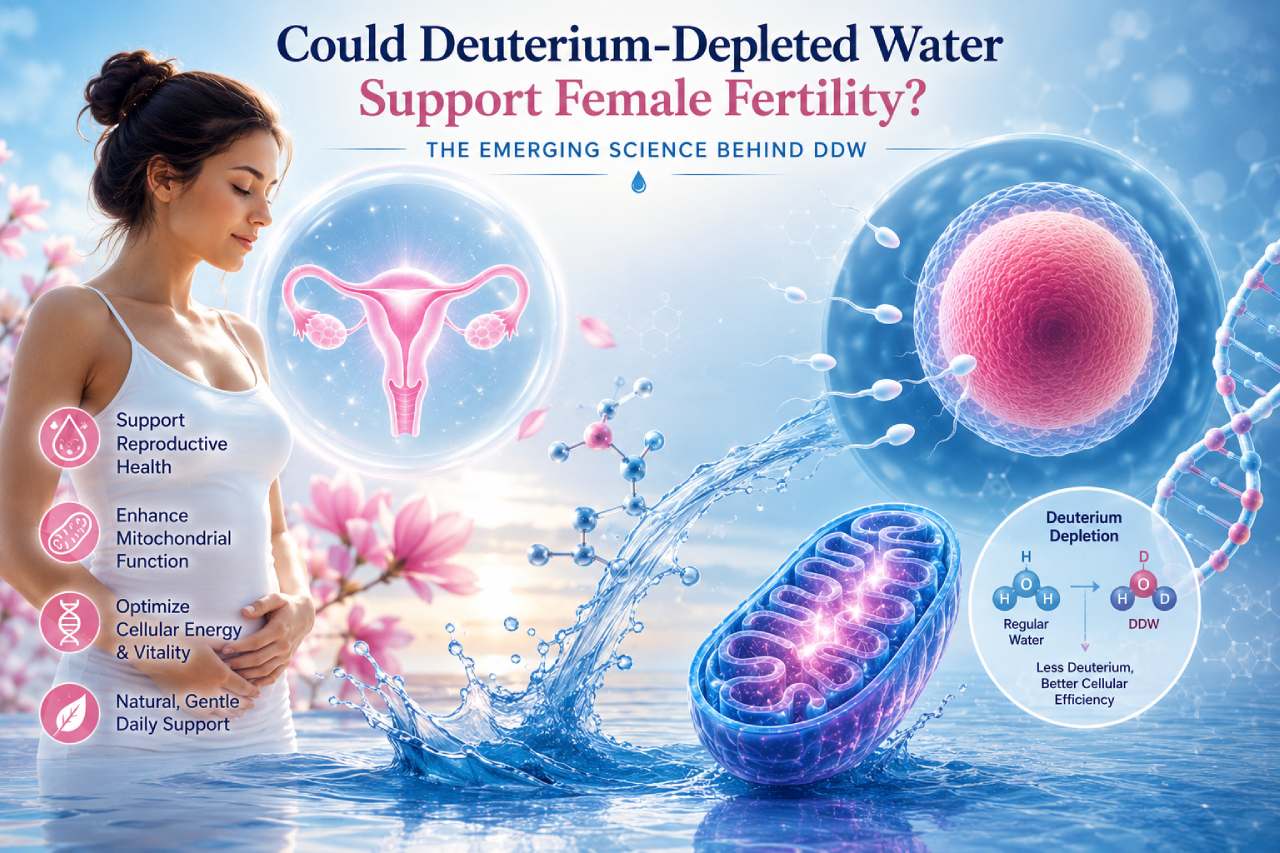

Female fertility depends on far more than hormones alone. Healthy mitochondria, efficient energy production, and balanced metabolism all play critical roles in reproductive function. A growing body of research suggests that deuterium-depleted water (DDW) may support these systems by helping optimize cellular energy production and reducing metabolic stress. While much of the science remains in its early stages, the findings are intriguing enough to warrant serious attention.
Female fertility is one of the most energy-intensive biological processes in the human body. From egg maturation and ovulation to embryo development and implantation, every stage relies heavily on efficient cellular energy production. This is one reason why researchers are increasingly interested in the role of mitochondria—the microscopic energy factories inside our cells—in reproductive health.
A growing area of investigation involves deuterium, a naturally occurring heavy isotope of hydrogen found in all water and food. While deuterium is a normal component of nature, scientists have discovered that excessive intracellular deuterium may influence metabolic processes and mitochondrial performance. This has led to interest in deuterium-depleted water (DDW), a specialized drinking water containing lower-than-natural levels of deuterium.
Although human fertility studies remain limited, several experimental and animal studies suggest that deuterium depletion may positively influence reproductive function and endocrine regulation. Research reviewed by Basov and colleagues identified physiological effects of DDW on female animals, including changes in adaptive and hormonal responses that could have implications for reproductive health. Meanwhile, broader reviews of deuterium biology have highlighted its influence on cellular metabolism, endocrine function, and mitochondrial activity.
The mitochondrial connection is particularly important. Modern fertility research increasingly recognizes that mitochondrial dysfunction is associated with reduced egg quality, reproductive aging, and impaired embryo development.
According to recent reviews published in Frontiers in Pharmacology and other scientific journals, reducing deuterium exposure may alter mitochondrial oxidation processes and improve the efficiency of cellular energy production.
Researchers have proposed that mitochondria naturally work to generate water with lower deuterium content because excess deuterium may interfere with ATP synthase, the molecular machinery responsible for producing cellular energy.
This mitochondrial perspective also helps explain why DDW research extends beyond fertility. Several studies and reviews have explored potential applications in metabolic disorders, including obesity, insulin resistance, and diabetes. A 2024 scoping review examining nutritional deuterium depletion reported potential benefits across several health domains, including diabetes, healthy aging, cognitive performance, and cancer prevention. While more clinical trials are needed, the consistency of findings across different fields suggests that deuterium regulation may represent a previously overlooked aspect of human metabolism.
Cancer research has generated some of the strongest DDW evidence to date. Multiple laboratory, animal, and clinical investigations have reported that deuterium depletion may help slow cancer cell proliferation and improve outcomes when combined with conventional therapies.
Researchers believe this may be linked to altered mitochondrial metabolism and changes in cellular growth signaling pathways. Although these findings should not be interpreted as proof of efficacy for every condition, they reinforce the broader concept that deuterium levels may influence fundamental biological processes.
For women seeking proactive strategies to support fertility, metabolic wellness, and healthy aging, DDW represents a promising area of emerging science. It is not a substitute for medical care, nor is it a miracle solution. However, the growing understanding of mitochondrial health suggests that managing deuterium exposure may become an increasingly important component of preventive wellness in the years ahead.
For those interested in incorporating DDW into their daily routine, HydroHealth DDW offers a practical and accessible option. While specialty water may initially appear expensive, the actual daily cost is often comparable to many common wellness supplements, premium coffees, or energy drinks. Considering the growing scientific interest in mitochondrial health and deuterium regulation, many consumers find that DDW represents a surprisingly affordable investment in long-term wellbeing.
REFERENCES
* Qu J. et al. *The Biological Impact of Deuterium and Therapeutic Potential of Deuterium-Depleted Water* (2024). ([PMC][1])
* Korchinsky N. et al. *Nutritional Deuterium Depletion and Health: A Scoping Review* (2024).
* Basov A.A. et al. *Deuterium-Depleted Water Influence on Biological Systems* (2019).
* Lu Y. et al. *Deuterium-Depleted Water in Cancer Therapy: A Systematic Review* (2024).
* Kyriakopoulos A.M. *Explaining Deuterium-Depleted Water as a Cancer Therapy* (2025).