

The 100-Year Blueprint: Mitochondria, Deuterium, and Your Daily Water
Longevity research is revealing surprising connections between cellular energy, metabolic stress, hydration, and healthy aging. One area gaining attention is deuterium-depleted water (DDW)—a form of water with lower amounts of the hydrogen isotope deuterium, studied for potential effects on mitochondrial efficiency.
Drink for the Long Run: Deuterium-Depleted Water and Longevity
What if reaching 100 wasn’t just luck, but preparation? Science now shows that long life depends on layers of habits—nutrition, movement, emotional health, and cellular biology. Within this scientific story, mitochondria stand out.
These tiny engines fuel every heartbeat, every breath, and every thought. New research suggests that lowering deuterium levels—often by drinking DDW—may support mitochondrial function. While research is still emerging and not a guarantee of longer life, it is an intriguing area worth understanding.
Mitochondria: The Heart of Longevity Science
Mitochondria turn food and oxygen into ATP, the universal fuel of life. As decades pass, mitochondria can slow down, accumulate damage, and produce more oxidative stress. Many longevity researchers believe mitochondrial decline may contribute to age-related fatigue, slower metabolism, and increased chronic disease risk.
Laboratory studies have reported that lower-deuterium environments may support mitochondrial efficiency and reduce certain forms of oxidative stress in cells. While this work is promising and a growing research field, it remains early-stage science—not yet definitive proof for humans.
For the average person, the takeaway is simple: mitochondria matter. Supporting them through lifestyle habits may support longer, healthier living—nutrition, exercise, sleep, stress control, and potentially, deuterium-aware hydration.
The Hidden Hydrogen: How Deuterium Connects to Aging
Water isn’t just H₂O; a tiny portion contains a heavier form of hydrogen called deuterium. This occurs naturally in oceans, lakes, rivers, the atmosphere, and inside all living bodies.
Scientists have long known that extremely high amounts of deuterium can interfere with cellular processes in animals and plants. More recent studies explore what happens when deuterium levels are lowered instead of raised.
DDW simply reduces the proportion of deuterium compared with normal drinking water. It looks and tastes the same—but the isotope balance is lighter.
The idea is that lowering deuterium may influence how cells produce energy, and energy quality is deeply connected to aging. It doesn’t mean DDW is a cure for aging, but it gives longevity science a fascinating new angle.
Living to 100: A Practical Longevity Perspective
There is no single factor that makes people reach 100, but long-lived populations around the world share patterns:
- Mostly plant-based diets
- Regular physical movement
- Strong social bonds
- Stable mental outlook
- Minimal smoking or alcohol
- Good hydration habits
Researchers have noticed that some high-altitude regions and deep aquifer areas have naturally lower deuterium water and also host large groups of people who live past 100. This does not prove cause-and-effect, but it adds curiosity to the discussion.
Meanwhile, DDW research continues in areas like metabolism, mitochondria, inflammation, and cellular aging. More human studies are needed before medical claims can be made, yet the science so far is engaging and supportive of continued exploration.
How DDW Fits into a Healthy Aging Plan
DDW is not a miracle cure for disease or a guaranteed path to 100 years old. Instead, it can be seen as one optional tool—based on emerging mitochondrial and metabolic science—that some people integrate into a broader longevity lifestyle.
Areas Where DDW Is Being Studied
Researchers have explored DDW for potential supportive effects in:
- Cancer metabolism research: laboratories study how low-deuterium environments can influence cancer cell behavior (not a cure, not a replacement for treatment).
- Diabetes & metabolic balance: interest includes energy efficiency and insulin sensitivity.
- Brain and mood research: some studies explore effects relating to depression, stress, and cellular energy in the brain.
- Memory & cognitive health: because the brain depends heavily on mitochondrial output, deuterium levels are being studied in that context.
- Cardiovascular research: exploring mitochondrial stress and vascular energy demand.
- Inflammation & immune activity: early work examines oxidative stress reduction in cells.
- Weight management & metabolism: cells may burn calories differently in lower-deuterium environments.
How DDW Fits in Day-to-Day
Someone aiming for longevity may also choose to:
- Eat whole foods, especially plants
- Build and maintain muscle
- Sleep consistently
- Hydrate with clean water
- Build social support
- Reduce stress
- Avoid ultra-processed foods
If DDW supports mitochondrial efficiency, drinking it alongside these habits may help create a stronger cellular foundation for aging well.
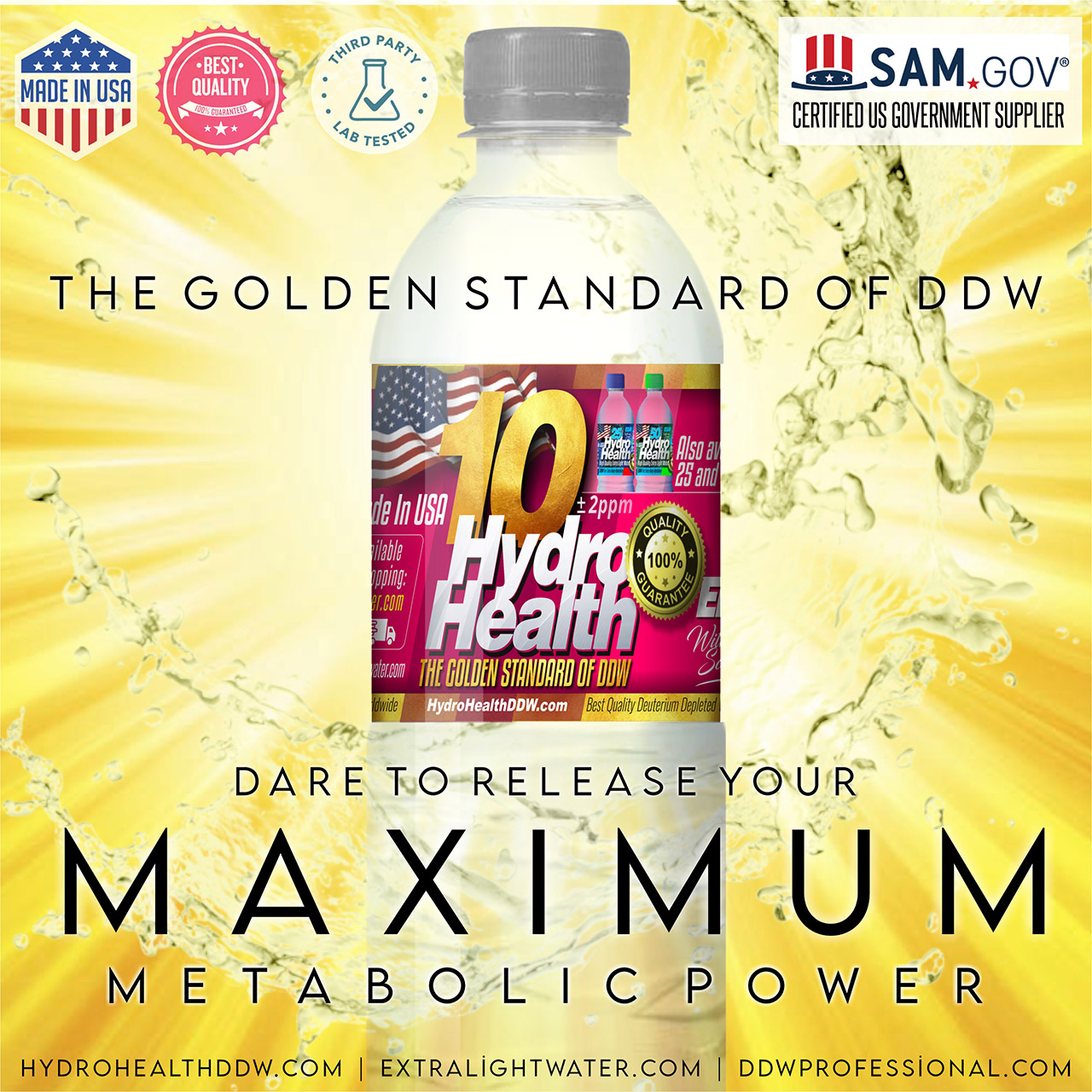
Why Many Consumers Look Toward HydroHealth DDW
For those who decide to explore DDW, product quality matters—because true DDW requires precise manufacturing and laboratory verification.
HydroHealth DDW stands out because it is:
- The only deuterium-depleted water produced in the United States
- Manufactured by a SAM.gov certified supplier
- Frequently tested for purity and deuterium content
- Biologically clean and made under controlled production standards
- In a field where most DDW is imported, expensive, and seldom tested, an American-made, regularly verified product is valuable.
Longevity is not luck alone. It is a blueprint built on daily choices: movement, nutrition, community, sleep, stress resilience—and hydration decisions that support your biology instead of working against it.