
Interest in deuterium-depleted water has steadily grown over the past decade, particularly among those focused on longevity, recovery, and metabolic health. While the science is still evolving, many experts believe the topic deserves renewed attention — especially in today’s high-stress world.
Health trends come and go, but some topics continue to resurface because they touch on something fundamental. Deuterium-depleted water, commonly known as DDW, is one of them.
Although it has existed for decades in scientific research circles, DDW has recently regained attention among wellness professionals, researchers, athletes, and individuals interested in preventive health. The reason is simple: growing interest in how cellular energy production influences overall health and aging.
Deuterium is a naturally occurring isotope of hydrogen found in all living organisms and water sources. Unlike regular hydrogen, deuterium contains an additional neutron, making it heavier. In recent years, researchers studying metabolism and mitochondrial activity have explored whether excessive deuterium accumulation may interfere with certain cellular processes.
This is where DDW enters the discussion.
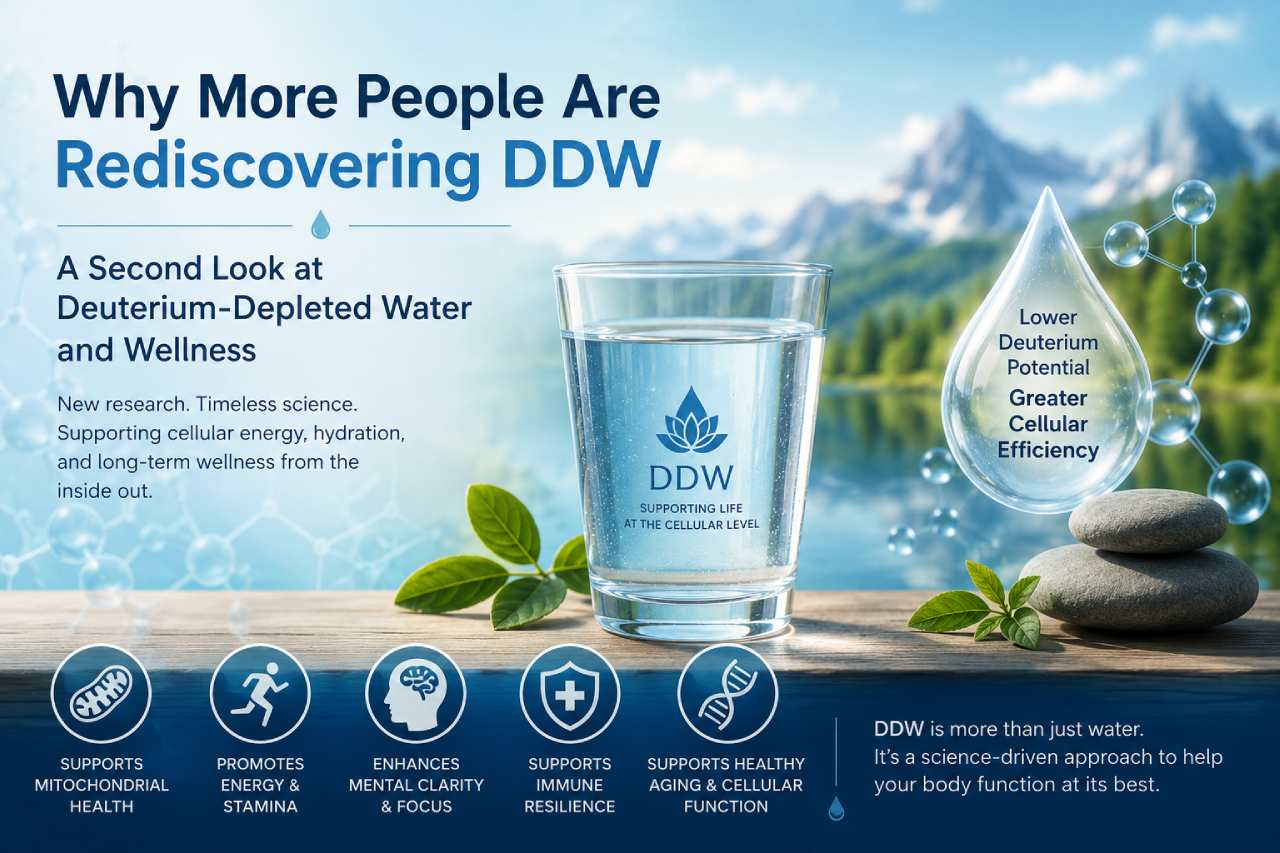
By reducing the concentration of deuterium in drinking water, the body may be able to maintain a more efficient metabolic environment. Much of the interest centers around mitochondria — the structures responsible for producing cellular energy.
Mitochondria play a role in nearly every major biological function: energy levels, cognitive clarity, recovery, immune response, and healthy aging. When mitochondrial function declines, the effects can be felt throughout the body. Fatigue, slower recovery, inflammation, and reduced resilience are often linked to metabolic stress.
Supporters of DDW suggest that lowering deuterium intake may help support mitochondrial efficiency and cellular balance. While more clinical research is still needed, preliminary studies and ongoing investigations continue to fuel curiosity around the topic.
DDW has been explored as a complementary wellness approach in research involving metabolic disorders, mitochondrial dysfunction, inflammation, neurodegenerative diseases, and certain cancers. However, DDW is not an approved cure or standalone treatment for any disease.
DDW has supportive roles in the following conditions and health areas:
-
Cancer (especially metabolic and adjunctive research discussions)
-
Type 2 Diabetes
-
Obesity
-
Chronic Fatigue Syndrome
-
Lyme Disease
-
Parkinson’s Disease
-
Alzheimer’s Disease
-
Multiple Sclerosis
-
Epilepsy
-
Migraine
-
Hypertension
-
Cardiovascular Disease
-
Non-Alcoholic Fatty Liver Disease
-
Metabolic Syndrome
-
Autoimmune Disease
-
Rheumatoid Arthritis
-
Hashimoto’s Thyroiditis
-
Psoriasis
-
Inflammatory Bowel Disease
-
Long COVID
-
COVID-19
-
Fibromyalgia
-
Insomnia
-
Depression
-
Anxiety Disorder
-
Infertility
-
Polycystic Ovary Syndrome
-
Chronic Inflammation
Another reason DDW resonates with so many people today is the environment we live in.
Modern lifestyles are frequently associated with chronic stress, processed foods, poor sleep, sedentary habits, and environmental overload. In that context, consumers are increasingly looking for wellness approaches that support the body at a foundational level rather than simply masking symptoms.
That shift has led many people to revisit older health concepts with fresh eyes.
DDW is also gaining attention in longevity and performance communities. Athletes, biohackers, and wellness practitioners often discuss hydration not only in terms of fluid replacement, but also in terms of cellular quality and metabolic efficiency. Some individuals who regularly consume DDW report improvements in stamina, mental clarity, and recovery, although personal experiences should not be confused with medical conclusions.
Importantly, DDW is not a miracle solution. Rather, it is an important part of a broader lifestyle approach focused on nutrition, movement, sleep, stress management, and metabolic health.
Still, the growing scientific interest surrounding deuterium and cellular metabolism suggests the conversation is far from over.
And perhaps that is the most important takeaway: it is never too late to revisit ideas that encourage people to think more deeply about how the body produces energy, adapts to stress, and supports long-term health from the inside out.
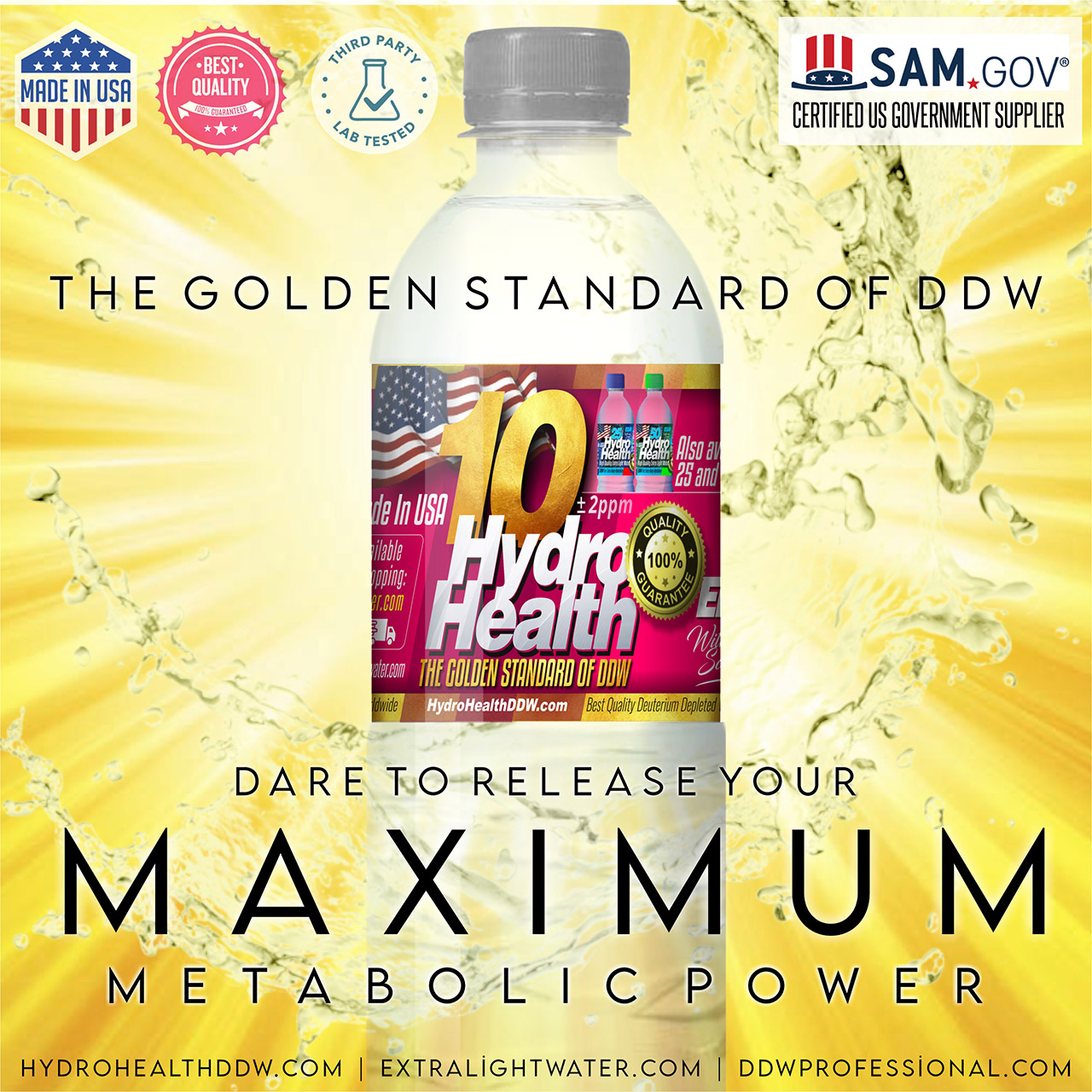
HydroHealth DDW stands out for its strong focus on education, mitochondrial health awareness, and highly depleted water formulations. The company offers DDW products with significantly reduced deuterium concentrations compared to regular drinking water, including 10 ppm, 25 ppm, and 50 ppm variants. Natural drinking water typically contains around 150 ppm deuterium.
HydroHealth DDW also collaborates with and features educational materials from physicians, researchers, and wellness experts interested in metabolism, aging, and cellular energy production. The brand positions DDW not as a miracle cure, but as a science-driven lifestyle tool that may help support overall metabolic balance and mitochondrial efficiency when combined with healthy nutrition and lifestyle habits.
For readers curious about exploring DDW firsthand, HydroHealth represents one of the better-known premium brands in this emerging category — particularly for those looking to take a more proactive approach toward hydration, recovery, energy, and long-term wellness.