

Deuterium-Depleted Water (DDW): Potential Implications for Drug Delivery, Cellular Function, and Therapeutic Support
Abstract
Deuterium-depleted water (DDW) has emerged as a subject of interest in biomedical research due to its altered isotopic composition and potential influence on cellular processes. This white paper examines the theoretical basis, proposed mechanisms, and observational data surrounding DDW, with a particular focus on its potential interaction with pharmacological treatments. While preliminary findings and clinical observations suggest possible effects on drug response and metabolic activity, current evidence remains limited. This paper aims to provide a structured overview of existing knowledge while identifying key gaps for future research.
Introduction
Water is central to all physiological processes, including the dissolution, transport, and cellular uptake of pharmaceutical compounds. Despite its importance, the qualitative properties of water—particularly isotopic composition—are rarely considered in therapeutic contexts.
Deuterium, a stable isotope of hydrogen, is naturally present in water at concentrations of approximately 150 parts per million (ppm). Deuterium-depleted water (DDW) is produced through processes that reduce this concentration, sometimes to levels as low as 50 ppm or below.
Growing interest in DDW stems from the hypothesis that modifying isotopic composition may influence biochemical and cellular mechanisms, potentially affecting health outcomes and treatment responses.
Background: Deuterium and Biological Systems
Deuterium differs from protium (standard hydrogen) by the presence of an अतिरिक्त neutron, resulting in increased atomic mass. This difference can influence:
* hydrogen bonding dynamics
* enzyme kinetics
* proton transfer reactions
* mitochondrial function
Research in isotope biology suggests that even small variations in isotopic ratios may have measurable biological effects. These findings have led to the exploration of DDW as a potential modulator of cellular processes.
Hypothesized Mechanisms of Action
Several mechanisms have been proposed to explain how DDW may influence biological systems:
#Mitochondrial Function
Reduced deuterium levels may support more efficient proton transfer within mitochondria, potentially enhancing ATP production.
#Cellular Metabolism
Altered isotopic ratios may influence metabolic pathways, including those involved in energy regulation and oxidative stress.
#Membrane Transport
Changes in hydrogen bonding could affect membrane permeability and transport efficiency, potentially influencing how substances enter and exit cells.
DDW and Drug Interaction
Some practitioners and observational reports suggest that consuming medications with DDW instead of regular water may enhance the delivery or effectiveness of active compounds. The hypothesis is that altering the isotopic composition of water could influence cellular processes, potentially affecting how substances are absorbed and utilized.
From a pharmacological perspective, this raises questions regarding:
* drug solubility and dissolution
* absorption kinetics
* cellular uptake efficiency
* metabolic processing
Clinical and Observational Data
Over recent years, DDW has been utilized in various health contexts, generating a body of observational data:
#Neurological Conditions
Exploratory use in epilepsy and developmental disorders has been reported, particularly in pediatric populations.
#Age-Related Disorders
In older individuals, DDW consumption has been associated with reported improvements in fatigue and overall quality of life.
#Chronic Disease Contexts
DDW has been used as a complementary approach in individuals with multiple chronic conditions, including metabolic and cardiovascular disorders.
#Oncology Applications
Observational reports suggest DDW may be used alongside conventional cancer treatments. Some cases describe tumor response and reduced recurrence over multi-year periods, although these findings remain unverified in controlled trials.
These observations do not constitute clinical proof and should be interpreted cautiously.
Deuterium Reduction and Physiological Adaptation
The human body is estimated to maintain deuterium levels around 150 ppm under typical conditions. DDW consumption has been associated with gradual reductions toward lower levels, such as 130 ppm or below.
This process is characterized by:
* slow progression over extended periods
* dependence on intake consistency
* interaction with metabolic and environmental factors
Nutritional and Metabolic Considerations
While DDW is often discussed in relation to cellular energy, metabolic health depends on a broader set of factors, including:
* adequate macronutrient intake
* sufficient vitamins and minerals
* overall dietary balance
Any potential benefits of DDW are likely to be influenced by these variables, underscoring the importance of a holistic approach to health.
Commercial Availability and Applied Use
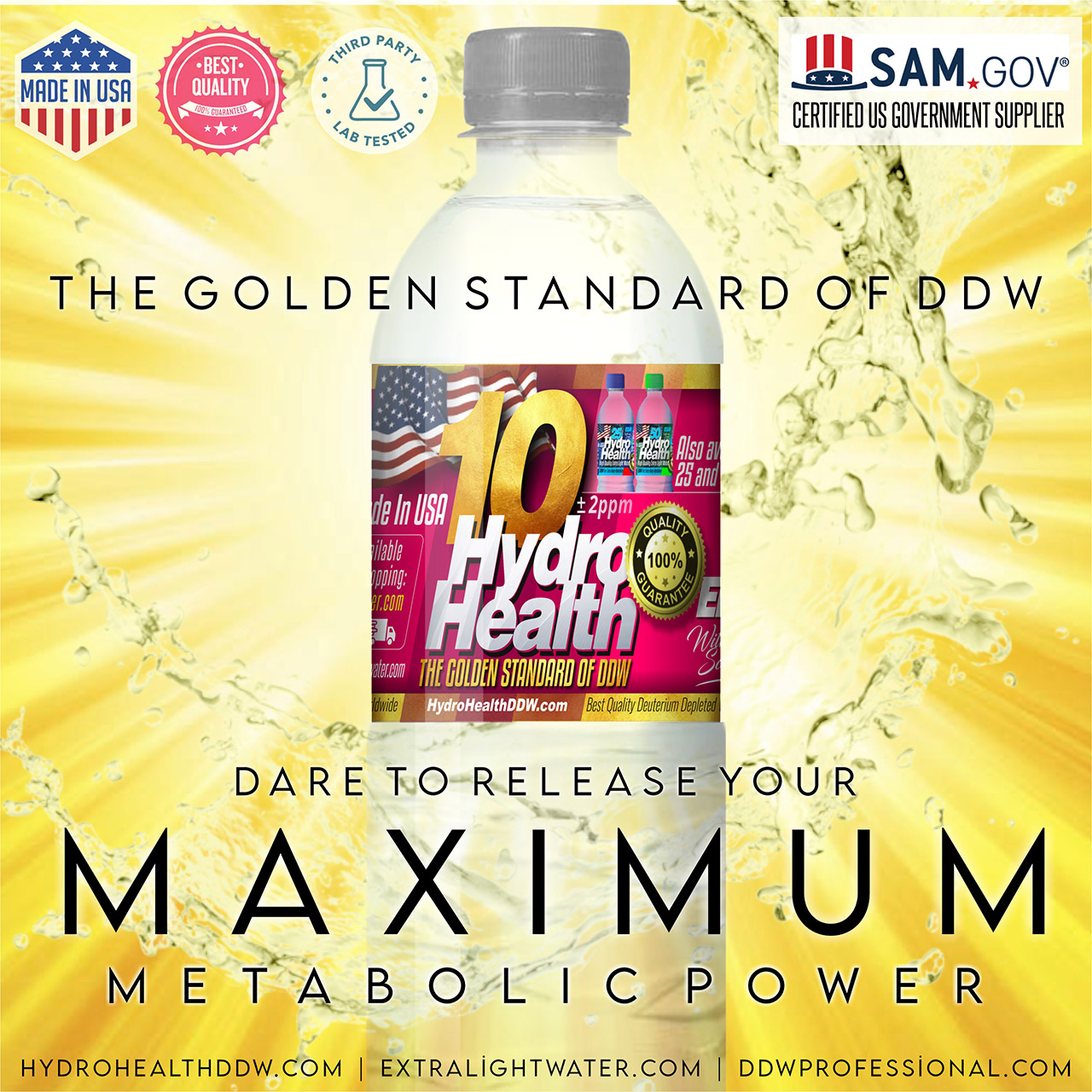
DDW is currently available through specialized providers such as HydroHealth, which offer products with controlled deuterium concentrations for consumer use.
While such products enable practical application, their use should be considered experimental and complementary. They are not a substitute for established medical treatments or professional healthcare guidance.
Future Research Directions
To better understand the role of DDW in medicine, future research should focus on:
* controlled clinical trials evaluating drug interaction effects
* mechanistic studies at the cellular and molecular levels
* long-term safety and efficacy assessments
* standardization of dosing and administration protocols
Conclusion
Deuterium-depleted water represents a promising area of scientific inquiry. While theoretical models and observational data suggest potential effects on cellular function and drug response, current evidence remains insufficient for clinical validation.
Until further research is conducted, DDW should be regarded as an experimental adjunct rather than an established therapeutic intervention.