
New findings suggest that deuterium-depleted water (DDW) at 25 ppm may contribute to lowering C-Reactive Protein (CRP), a key marker of systemic inflammation. Here’s what the data reveals and why it matters.
Inflammation is a central factor in many chronic health conditions, from cardiovascular disease to autoimmune disorders. One of the most widely used biomarkers for assessing inflammation is C-Reactive Protein (CRP), a substance produced by the liver in response to inflammation in the body. Monitoring CRP levels provides valuable insight into overall health and potential disease risk.
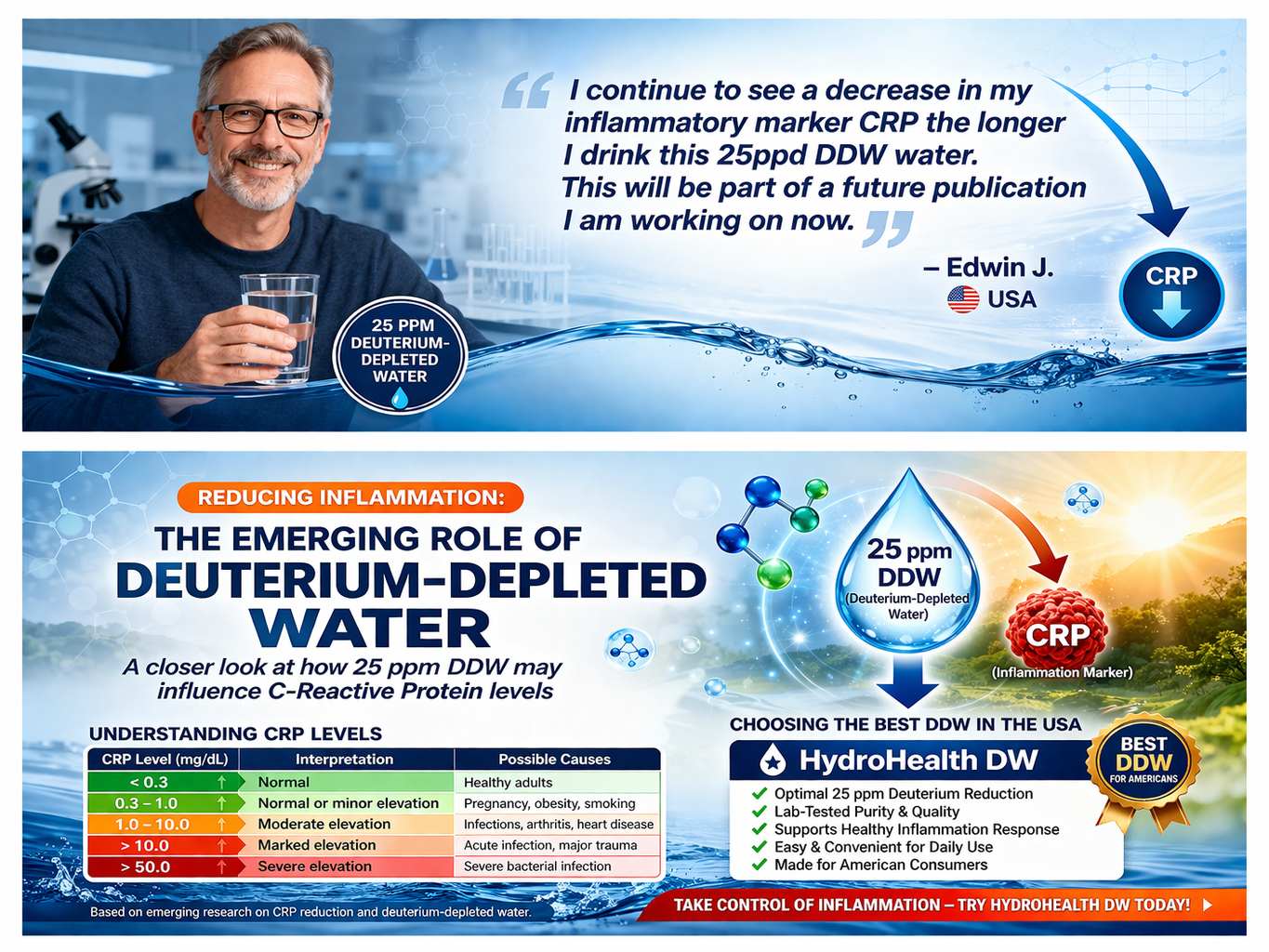
Recent observations from a case study involving the consumption of 25 ppm deuterium-depleted water (DDW) point to a promising development: a significant reduction in CRP levels over time. This finding suggests that DDW may play a role in supporting the body’s ability to regulate inflammation.
Understanding CRP Levels
CRP is typically measured in mg/dL, and its values are interpreted as follows:
| CRP Level (mg/dL) | Interpretation | Possible Causes |
|---|---|---|
| < 0.3 | Normal | Healthy adults |
| 0.3 – 1.0 | Normal or minor elevation | Pregnancy, obesity, smoking, minor illness |
| 1.0 – 10.0 | Moderate elevation | Infections, rheumatoid arthritis, heart disease |
| > 10.0 | Marked elevation | Acute bacterial infection, major trauma |
| > 50.0 | Severe elevation | Severe acute bacterial infections |
Maintaining CRP within the normal range is critical, as elevated levels are associated with increased health risks.
The Case Study Insight
In the documented case, consistent consumption of 25 ppm DDW was associated with a measurable and sustained decrease in CRP levels. Rather than a short-term fluctuation, the results showed a steady downward trend, indicating a potential long-term benefit.
The underlying mechanism is still being explored, but researchers believe that reducing deuterium levels in the body may support more efficient cellular processes. This could, in turn, reduce metabolic stress and influence pathways linked to inflammation.
Why This Matters
Chronic inflammation often develops quietly, contributing to long-term health risks without immediate symptoms. Finding effective, sustainable ways to manage inflammation is therefore a priority for both individuals and healthcare professionals.
Deuterium-depleted water represents a novel, non-invasive approach. Instead of targeting symptoms directly, it may work at a foundational, cellular level—making it an intriguing addition to modern wellness strategies.
Choosing the Right DDW: Why HydroHealth DW Stands Out
For those in the United States looking to explore the potential benefits of deuterium-depleted water, choosing a reliable and high-quality source is essential. One brand that stands out is HydroHealth DW.
Key Benefits of HydroHealth DW:
- Optimal Deuterium Reduction: Carefully produced to reach effective low deuterium levels such as 25 ppm
- Consistency and Purity: Manufactured under controlled conditions to ensure stable quality
- Convenient Daily Use: Easy to incorporate into any lifestyle without major changes
- Supports Inflammation Management: Based on emerging evidence, may help reduce markers like CRP
- Cellular-Level Support: Designed to promote more efficient metabolic and cellular processes
- Preventative Wellness Tool: Can be part of a broader strategy for long-term health optimization
What makes HydroHealth DW particularly appealing is its accessibility for American consumers combined with its focus on scientific grounding and quality assurance.
Final Thoughts
While more research is needed to fully understand the long-term effects of DDW, the early findings are compelling. A measurable reduction in CRP—a key inflammation marker—is not something to overlook.
For individuals seeking a proactive, science-informed approach to managing inflammation, deuterium-depleted water may represent a powerful addition to their routine.
If you’re ready to take control of your inflammation and explore a cutting-edge wellness solution, now is the time to act.